Βασικές σημειώσεις για την εβραϊκή γραφή
Η εβραϊκή γραφή έχει μοναδικά χαρακτηριστικά που τη διαφοροποιούν από άλλες γλώσσες.
Ιδιαίτερα χαρακτηριστικά
- Το πρώτο εβραϊκό σύστημα γραφής είναι ίδιο με το φοινικικό.
- Το αραμαϊκό ή τετράγωνο αλφάβητο έχει χρήση μέχρι και σήμερα.
- Αποτελείται από 22 γράμματα.
- Το αλφάβητο αυτό καταγράφει μόνο τα σύμφωνα.
- Τα φωνήεντα συμβολίζονται με τελείες και παύλες και στα νέα εβραϊκά αυτά τα σημεία (niqqud) έχουν σπάνια χρήση, κυρίως στην παιδική λογοτεχνία και την ποίηση.
- Τα γράμματα δεν διακρίνονται σε πεζά και κεφαλαία, αλλά σε χειρόγραφα και τυπογραφικά.
- Η εβραϊκή γλώσσα γράφεται από δεξιά προς αριστερά. Αυτό ισχύει τόσο για τη γραφή όσο και για την ανάγνωση.
Το Εβραϊκό Αλφάβητο
Αντίστοιχα με το ελληνικό "Αλφάβητο" – που προέρχεται από τα δύο πρώτα γράμματα Άλφα και Βήτα – το εβραϊκό "Άλεφμπετ" αντλεί την ονομασία του από τα πρώτα δύο γράμματα της εβραϊκής αλφαβήτας, το Άλεφ και το Μπετ.
Πίνακας του εβραϊκού άλεφμπετ με το πρώτο γράμμα στην άνω δεξιά γωνία.
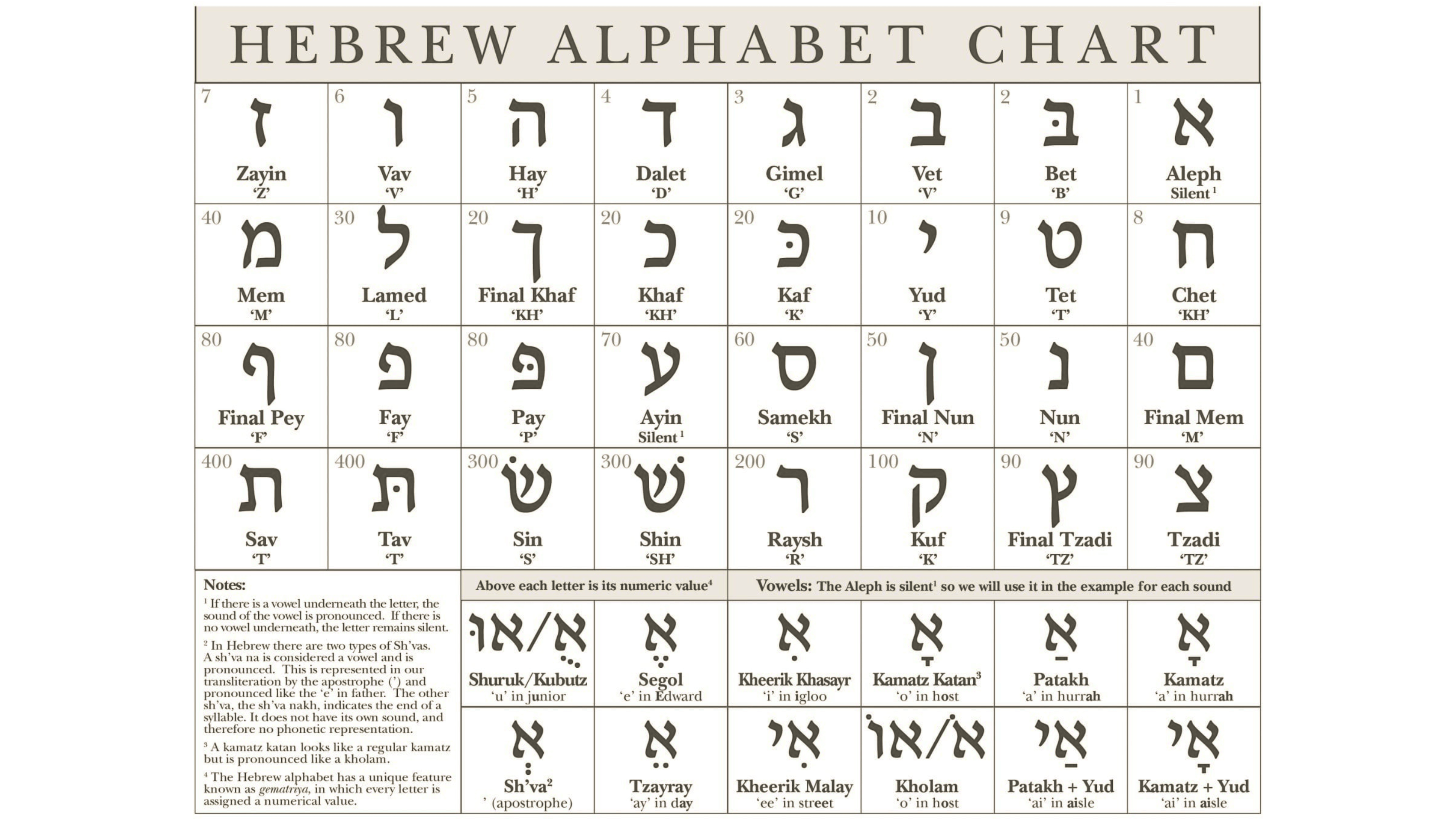
Το εβραϊκό αλφάβητο αποτελείται από 22 γράμματα, όλα σύμφωνα.
Γράμματα του άλεφμπετ με πολλές ομοιότητες
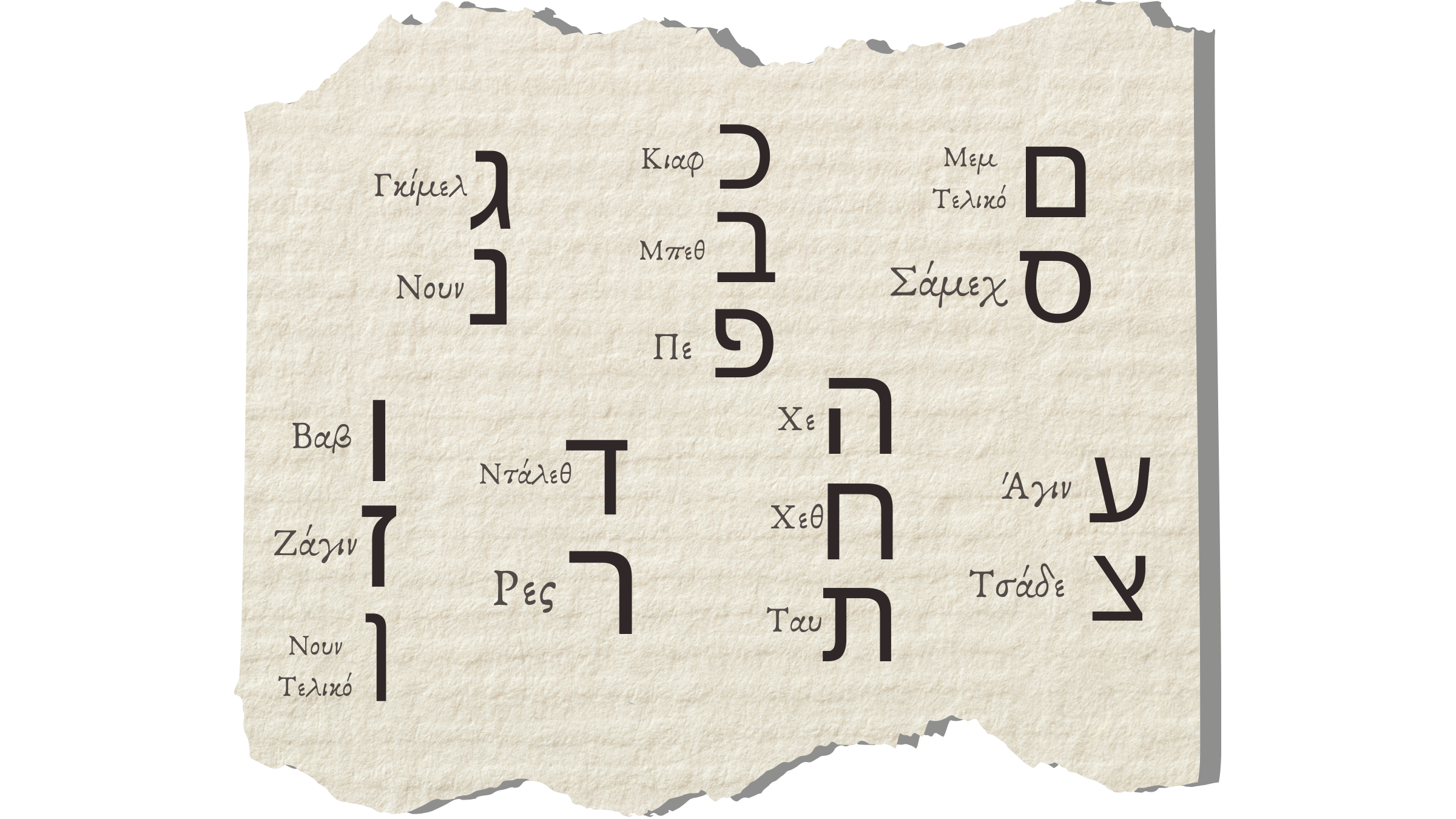
Τα πέντε τελικά γράμματα: (ך, ם, ן, ף, ץ) έχουν διαφορετικό σχήμα όταν βρίσκονται στο τέλος της λέξης.
Φωνήεντα & Σημεία (Νικούντ - נִקּוּד)
- Τα εβραϊκά δεν έχουν φωνήεντα ως ξεχωριστά γράμματα.
- Τα φωνήεντα σημειώνονται με τελείες και παύλες κάτω ή πάνω από τα γράμματα. Αυτά χρησιμοποιούνται κυρίως σε κείμενα για αρχάριους ή θρησκευτικά κείμενα.
- Σε καθημερινή χρήση, τα φωνήεντα συχνά παραλείπονται και γίνονται αντιληπτά από τα συμφραζόμενα.
- Το άλεφ δεν είναι φωνήεν. Το א θεωρείται σύμφωνο και αντιστοιχεί στην ψιλή (᾿).
Σύνδεση Γραμμάτων
- Σε αντίθεση με τα αραβικά, τα εβραϊκά γράμματα δεν ενώνονται μεταξύ τους.
- Κάθε γράμμα γράφεται ξεχωριστά.
Ειδικές Περιπτώσεις
Διάκριση B/V, P/F:
Το ב (Bet) έχει ήχο B όταν έχει τελεία (בּ) και V όταν δεν έχει.
Το פ (Pe) έχει ήχο P με τελεία (פּ) και F χωρίς τελεία.
Χρήση του ו (Vav) ως ημίφωνο:
Μπορεί να διαβάζεται ως V, αλλά και ως U ή O όταν έχει πάνω του ειδικό σημείο.
Γραφή αριθμών:
Οι αριθμοί στα εβραϊκά μπορούν να γραφούν και με γράμματα του αλφαβήτου, π.χ. א (1), ב (2), ג (3).
Καλλιγραφία:
Υπάρχουν διαφορετικά στυλ γραφής, όπως η τυπική εκτυπωτική μορφή και η χειρόγραφη μορφή (Ράσσι, Σταμ).
Διαφορές ελληνικού με εβραϊκό αλφάβητο
| ΕΛΛΗΝΙΚΟ ΑΛΦΑΒΗΤΟ | ΕΒΡΑΪΚΟ ΑΛΦΑΒΗΤΟ |
|---|---|
| Τα ελληνικά διαβάζονται και γράφονται από αριστερά προς τα δεξιά. | Τα εβραϊκά διαβάζονται και γράφονται από δεξιά προς τα αριστερά. Και η ανάγνωση βιβλίου στην εβραϊκή ξεκινά από το τελευταίο φύλλο του, όπως αυτό εκλαμβάνεται στη δυτική τυπογραφία. |
| Στο ελληνικό αλφάβητο υπάρχουν 24 γράμματα: μερικά είναι φωνήεντα (α, ε, ι, η, υ, ο, ω), και μερικά είναι σύμφωνα (β, γ, δ, ζ, κλπ) | Στο εβραϊκό αλφάβητο υπάρχουν 22 γράμματα και όλα είναι σύμφωνα. Τα φωνήεντα είναι τελείες και παύλες που προστίθενται από κάτω, δίπλα ή πάνω από τα σύμφωνα. |
| Τα γράμματα στα ελληνικά μπορεί να είναι κεφαλαία ή μικρά. | Τα γράμματα στα εβραϊκά έχουν μόνο μία μορφή. |
| Τα τελευταία γράμματα μιας λέξης στα ελληνικά παραμένουν τα ίδια εκτός από το τελικό σίγμα (ς). | Πέντε εβραϊκά γράμματα έχουν διαφορετική μορφή όταν εμφανίζονται στο τέλος μιας λέξης. |
| Τα αρχαία ελληνικά προφέρονται διαφορετικά ανάλογα με τον τρόπο προφοράς που έχει αποδεχτεί κανείς. Π.χ. υπάρχει η λεγόμενη ερασμιακή προφορά που προφέρει όλα τα φωνήεντα και δεν προφέρει μονοφωνικά τους περισσότερους διφθόγγους. Στην Ελλάδα προφέρουμε τα αρχαία ελληνικά όπως διαβάζουμε τα Νέα Ελληνικά (ροϊχλινιανή προφορά). | Τα εβραϊκά προφέρονται σήμερα με διαφορετικούς τρόπους. Η Σεφαραδίτικη ή Μεσοανατολική προφορά χρησιμοποιείται στο Ισραήλ και είναι η νέα εβραϊκή γλώσσα. |
Άσκηση Γραφής
Για να εξασκηθείς, προσπάθησε να γράψεις τα παρακάτω:
שלום (Shalom) – Σημαίνει "Ειρήνη" ή "Γεια"
- תורה (Torah) – Η Τορά, η ιερή γραφή του Ιουδαϊσμού.
- חיים (Chayim) – Ζωή.
- אהבה (Ahavah) – Αγάπη.