Solitreo Writing
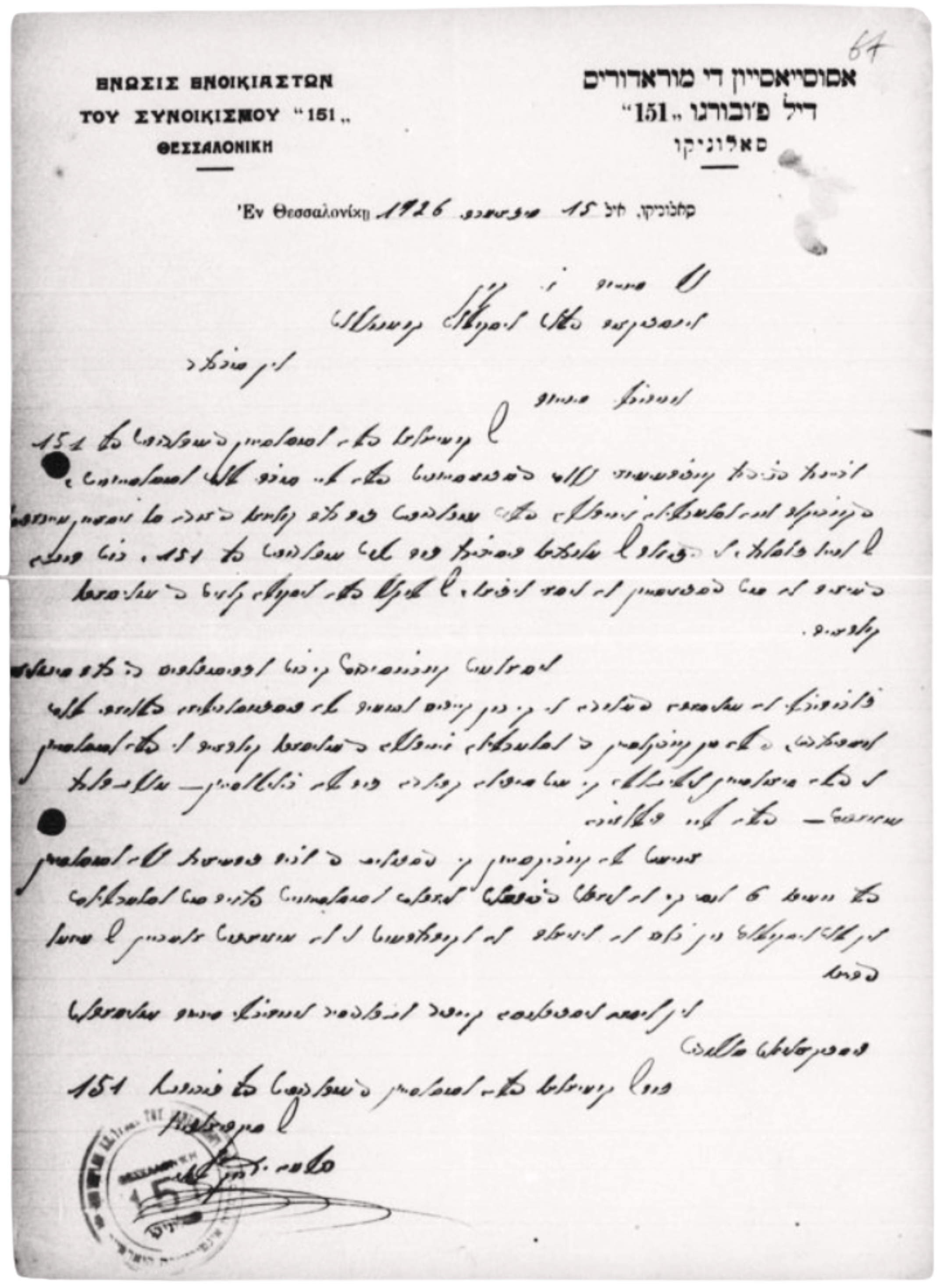
Letter from the Board of Directors of District 151 Residents Association to the Superintendent of Community Schools requesting approval to use the facilities of the Kazes School for their convention. Signed by the secretary of the Board Schlomo Yitzhak Levi. Written in Thessaloniki on 15 September 1926. Repository Jewish Community of Thessaloniki
Solitreo is a handwritten style of the Sephardic Hebrew alphabet of the Hebrew-Spanish and was used by Sephardic Jews. They began as a project to imprint the vernacular in Hebrew characters. They became a frequent and daily practice in manuscripts among the common and more educated people.
The Sephardis in the written word used Hebrew-Spanish with Rashi and Meruba characters in printed texts and Solitreo characters in manuscripts. The name of the latter is derived from the Portuguese-French word soletrear meaning “to spell” (the Spanish deletrear or the English verb to spell is more appropriate). The strong nature of the language is evident both in verbal use with the formation of proverbs and anecdotes and in the written form with the creation of moral lessons, the analysis of biblical texts and poems.
The fact that Solitreo is a handwritten script means that it is subject to a multitude of different scripts between people, communities, territories, historical periods and dialects, within the global Latino community, as it is a personal non-standard script, which may vary slightly depending on the scribe.
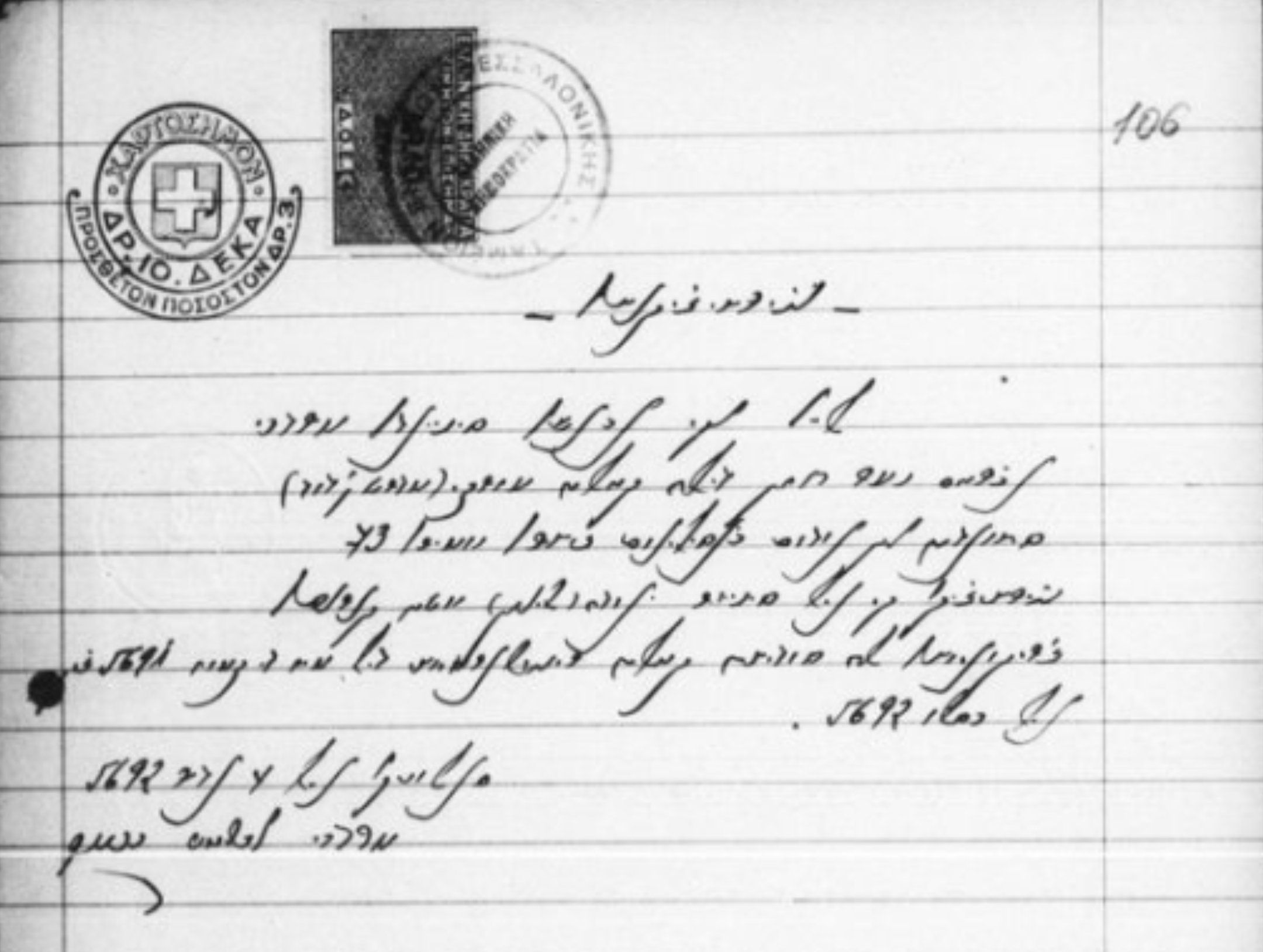
Certificate issued and signed by Mordechai Avram Naar, head of the Ezrati synagogue confirming that Yudah (Leon) Moshe Karasso is visiting it. Written in Thessaloniki on 12 March 1932. Repository Jewish Community of Thessaloniki
This script was used in personal letters, in correspondence between Jews and the religious court (Bet Din), in contracts and in non-religious texts. At the same time, it is also found in official correspondence between institutions of Jewish communities, which consisted mainly of Sephardic Jews in the wider Mediterranean area.
Similarly, in Thessaloniki -where the Sephardic presence dominated- the Rashi and Meruba scripts were used for printed texts, while for manuscripts the Solitreo script was largely, though not exclusively, preferred. Nowadays, Solitreo is almost extinct, but it remains a special cultural symbol of Sephardic heritage, with significant historical, cultural and linguistic value.