Jewish Calendar
Section outline
-
-

The creation of all calendars is determined by the sun, moon and stars. The way a 24-hour day and the seasons of the year are calculated is based on the sun and the movement of the earth around it. The solar calendar (Gregorian) depicts the position of the earth as it revolves around the sun, defining a year of 365 days, to which an extra day is added in leap years.
Lunar calendars, based on the Moon's rotation around the Earth, count the months of 29-30 days. This determines the lunar year which is - by ten or more days - shorter than the corresponding solar year of 365 days. The Jewish calendar, as a lunar calendar, determines the months by taking into account the phases of the moon. The Hebrew calendar is lunar and solar and combines the phases of the moon with the solar cycle. This means that the month is based on the phases of the Moon and the year, every 2-3 years, is aligned with the solar cycle through the addition of a piston month. The Hebrew calendar is based on the 19-year cycle of Metonus, including 12 years of 12 months and 7 leap years of 13 months.
The Jewish calendar is directly linked to Jewish tradition and religion. In the creation narrative, in the Bible, it is stated “He came in the evening, he came in the morning - first day”. In the Jewish calendar, the day begins at sunset and ends when three stars appear in the sky. And so, all Jewish holidays begin at sunset on the previous day. This is referred to as the first day of the festival, “Erev”, and means the eve. For example, if the dates of Rosh Hashanah are September 29-30, then the holiday begins at sundown on September 28 (erev Rosh Hashanah) and ends when three stars come out, on the evening of September 30.
(source: Jewish Community of Thessaloniki)
Solar Lunar Calendars
The waxing and waning of the moon roughly divides time into periods of 29–30 days. As a result, the lunar year is about 10 or more days shorter than the solar year of 365 days. This means that there is a difference of approximately 11 days between the lunar and solar year, which is offset by the inclusion of leap years that contain 13 months. A notable difference between the Gregorian calendar and the Hebrew calendar is the way in which days are counted. In the Hebrew calendar, the day begins at sunset. Thus, Saturday (Shabbat) begins at the moment the sun sets on Friday evening and ends when the sun sets the next day, on Saturday evening.
On the left is a copy of a Jewish calendar from 1831
-
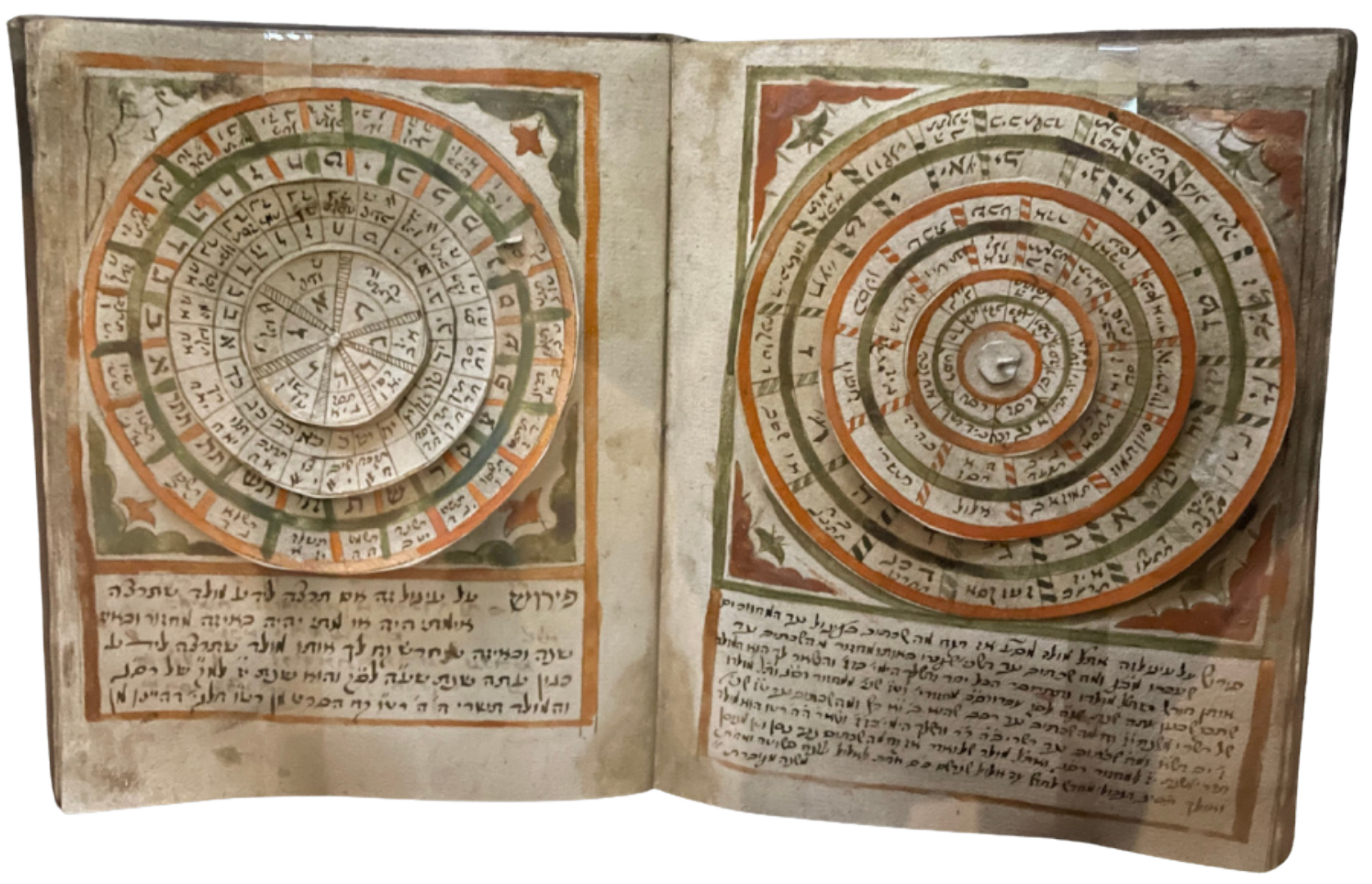
Guide to the Jewish calendar, copy, 18th century, Jewish Museum Prague
-
-
-
-
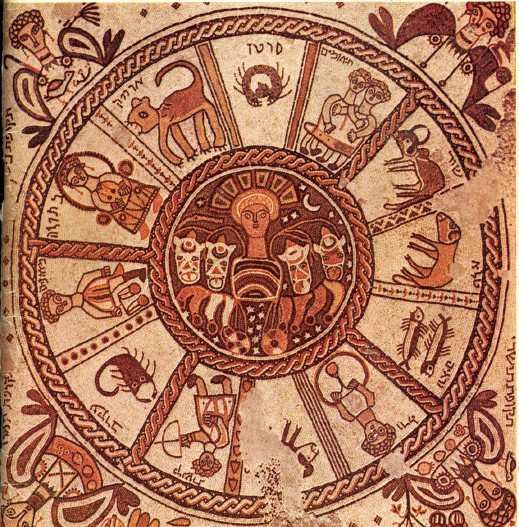
Greek motif (Sun chariot), the four seasons (turning points), equinoxes-solstices, months with their Hebrew name
Mosaic paving in a synagogue, Beit Alpha - Israel, 6th century
-
-